← Back to The 2601 Salon

For centuries, readers who wanted to write kept a commonplace book: a notebook of passages copied out by hand, sorted under headings, and returned to whenever a lesson needed a model or a sentence needed a spine. Students kept them in Renaissance grammar schools. The philosopher John Locke published a method for indexing one. A commonplace book was never finished. It grew as its keeper read.

This shelf is meant to grow in the same way. Here you will find the handouts, booklets, and guides from my courses, along with new craft booklets written for anyone who teaches, studies, or practices the art of writing and the reading of literature: templates for the short story with measured beat maps from famous stories, the word counts magazines accept today, a guide to the literary fantasy novel, twenty-six outlines for poems, stories, novels, and memoirs, and a glossary of the terms we use. At the end are links to the best free places I know to read, learn, and send out your work.

Every PDF is free to download, print, and share in a classroom. Please keep each booklet intact and credit Silver Current Press when you pass it along. New resources are added regularly.
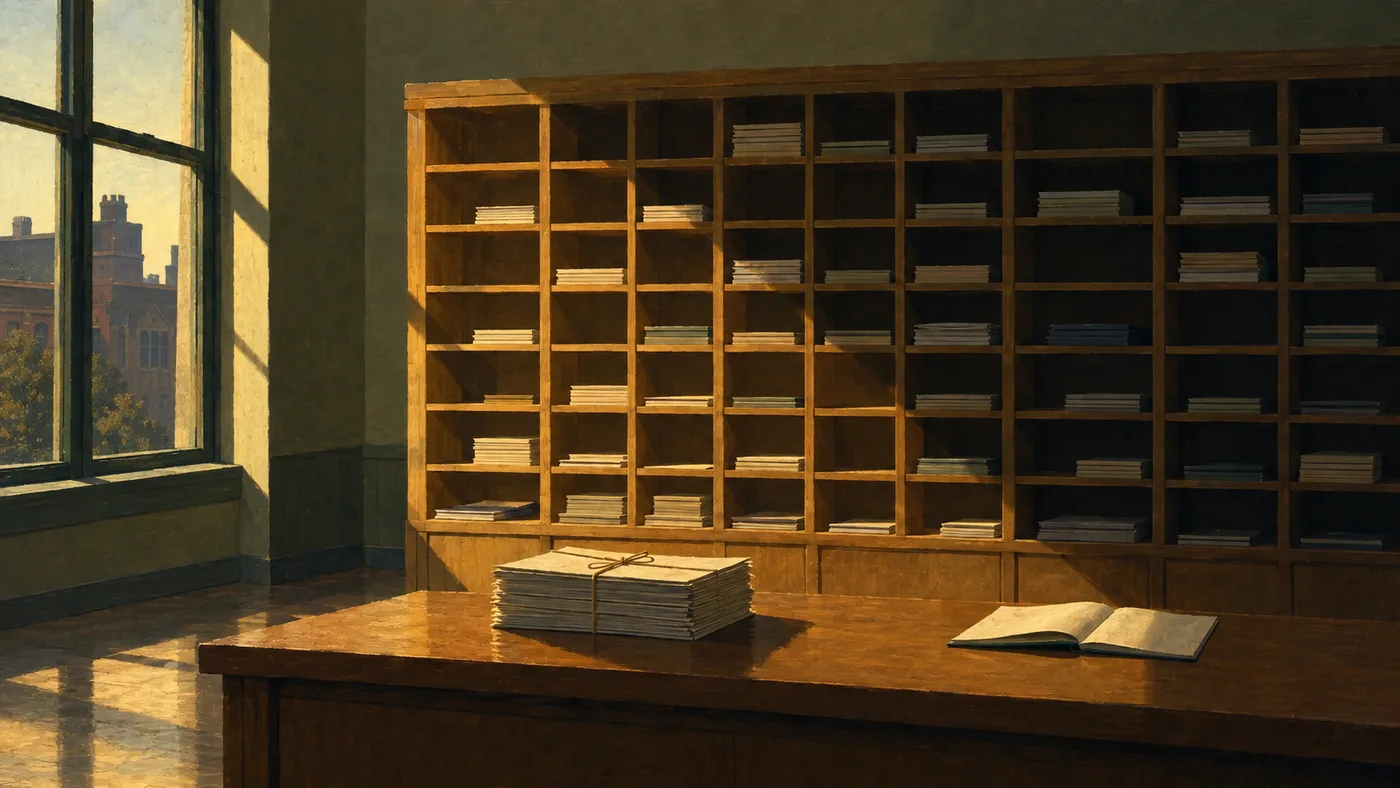
Painting in the manner of Edward Hopper: a wall of wooden pigeonholes holding stacked papers and booklets in late-afternoon light, a bundle of handouts tied with string on the counter below
The Pigeonholes, Late Afternoon · after Edward Hopper

Templates, Directions, and Markets

How a short story is shaped, how to write one, and how long it can be when you send it out.

New17 pages

The Shape of a Short Story

Eight story templates, each built on a famous story you can read free online, with a beat map that shows how far through the story each major event falls. The percentages were measured from the full texts of Maupassant, O. Henry, Chekhov, Joyce, Poe, Mansfield, and Hawthorne.

“In every story measured here, the decisive turn falls after the 80% mark.”

Download the PDF
New10 pages

Writing the Short Story

Directions, ideas, and exercises in nine stages, from finding the seed of a story to the final revision pass, with thirty story ideas, a four-week plan, and a table of common pitfalls.

Download the PDF
New10 pages

The Short Story Today

Lengths, genres, and the word counts editors accept, drawn from the current guidelines of literary, flash, mystery, science-fiction, fantasy, and horror magazines, with a guide to words and pages.

Download the PDF
17 pages

The Anton Chekhov Instructional Handbook

A complete classroom unit on “The Lady with the Dog”: context, the inward climax, comparison with Maupassant and Joyce, a student writing workshop, reproducible handouts, and instructor keys.

Download the PDF

Lengths, Genres, and Blueprints

Word counts across the genres, the craft of the literary fantasy novel, and outlines for building a book.

New25 pages

The Literary Fantasy Novel

Market, length, craft, and plotting for the literary fantasy novel, with a table of novel lengths across the major genres, a model query letter with annotations, and a final readiness checklist.

Download the PDF
New26 pages

Twenty-Six Blueprints

Outlines for writing poems, short stories, novels, and short memoirs, each with a structure, an example, a writing prompt, and a revision checklist. Includes six novel outlines, from the Snowflake Method to the scene–sequel method.

Download the PDF

The Words We Use

A glossary for the classroom and the writing desk, and a handbook for poets sending out their work.

New12 pages

A Glossary of Literary and Writing Terms

Nearly two hundred terms in plain language, from allegory to zeugma: the vocabulary of fiction, poetry, drama, the essay, literary history, and the writer’s trade.

Download the PDF
17 pages

Poetry Submission Guidelines

A handbook for the poet preparing to send work out: curated markets, how to assemble a submission packet, industry databases, and a glossary of literary and publishing terms.

Download the PDF

The History and Craft of the Poem

Booklets written for the poetry unit of The Art of Telling, free for any reader of poems.

57 pages

The Story of Poetry

A comprehensive history, craft, and field guide, from the origins of speech to the poets of the twenty-first century. Written as the poetry companion to The Art of Telling.

Download the PDF
30 pages

Contemporary Poetic Forms

Models, process, and a practical guide to the new forms: what contemporary poems look like by the numbers, the forms most published today, eight poem outlines, and how to publish new-form work.

Download the PDF
7 pages

A Glossary of Poetic Terms

A student reference for the poetry unit, defining each term briefly and illustrating it, wherever possible, with a line from Bishop, Frost, Williams, or Oliver.

Download the PDF
18 pages

The Poetry of James F. Mulhern: A Student Study Guide

Six poems for study with commentary, notes on style and technique, the question of school and tradition, and discussion questions.

Download the PDF
2 pages

The Poetry of James F. Mulhern: A Slim Companion

A two-page handout naming six signatures of the work, from plain diction to elegy without theatrics, for quick classroom use.

Download the PDF

The Art of Telling

Student handouts from the ten-session creative-writing salon in fiction, poetry, and memoir. Its two memoir booklets are on the Guides page.

Under One Roof

Handouts from the twelve-session nonfiction course on writing about place, memory, neighbors, and the history of a building.

12 pages

Syllabus and Textbook Guide

The shape of a twelve-session nonfiction course: four units, the session-by-session plan, the textbook, and the principles for writing about neighbors.

Download the PDF
24 pages

The Lives Within the Walls

A reading companion on writing the life of a building: eight nonfiction books, one short-form companion, and nine adaptable narrative blueprints.

Download the PDF
10 pages

Further Reading for Writers of Creative Nonfiction

A starter shelf and annotated lists of guides to the craft of nonfiction, to memoir, to the writing process, and anthologies of every kind of essay.

Download the PDF
21 pages

Sending It Out

A submission guide for nonfiction writers: how to revise one essay on your own, check its ethics, choose venues, and send it to magazines and journals.

Download the PDF
38 pages

Where to Submit Each Course Essay

A venue chart for every essay in the course, with what to change for each venue, how to submit, and sample letters.

Download the PDF
2 pages

Interview Consent and Release Form

A plain-language form for anyone who agrees to be interviewed, quoted, or written about, recording exactly what each person permits.

Download the PDF
1 page

Session Calendar

A one-page calendar of the twelve sessions and the reading for each, with space for dates, time, and room.

Download the PDF

Last updated October 2026

Join the Reader's Circle

Get The Quiet Craft: A Working Writer's Notebook — an expanded collection of working notes on fiction, poetry, and memoir craft — free, plus occasional word of new essays, poems, and guides. No spam, unsubscribe anytime.

Join the Circle & Get the Booklet
Silver Current Press family: Silver Current Press · The 2601 Salon · For Program Partners
See James Mulhern’s full body of work — fiction, courses, and publishing — in The Gathering Room →